Scroll through these steps for a strong start to the semester!
Watch and read each section to ensure you can access your digital platforms, create a study plan, get organized, practice self-care, and connect with your coach and advisors.
1. Get Set Up for Success
The foundation of a successful semester begins with ensuring that you have access to all the essential tools and resources your school provides:
Access Your School Email: Your school email is your primary line of communication with instructors, advisors, and fellow students. Make sure you can log in, and check it regularly.
If Your School Has One:
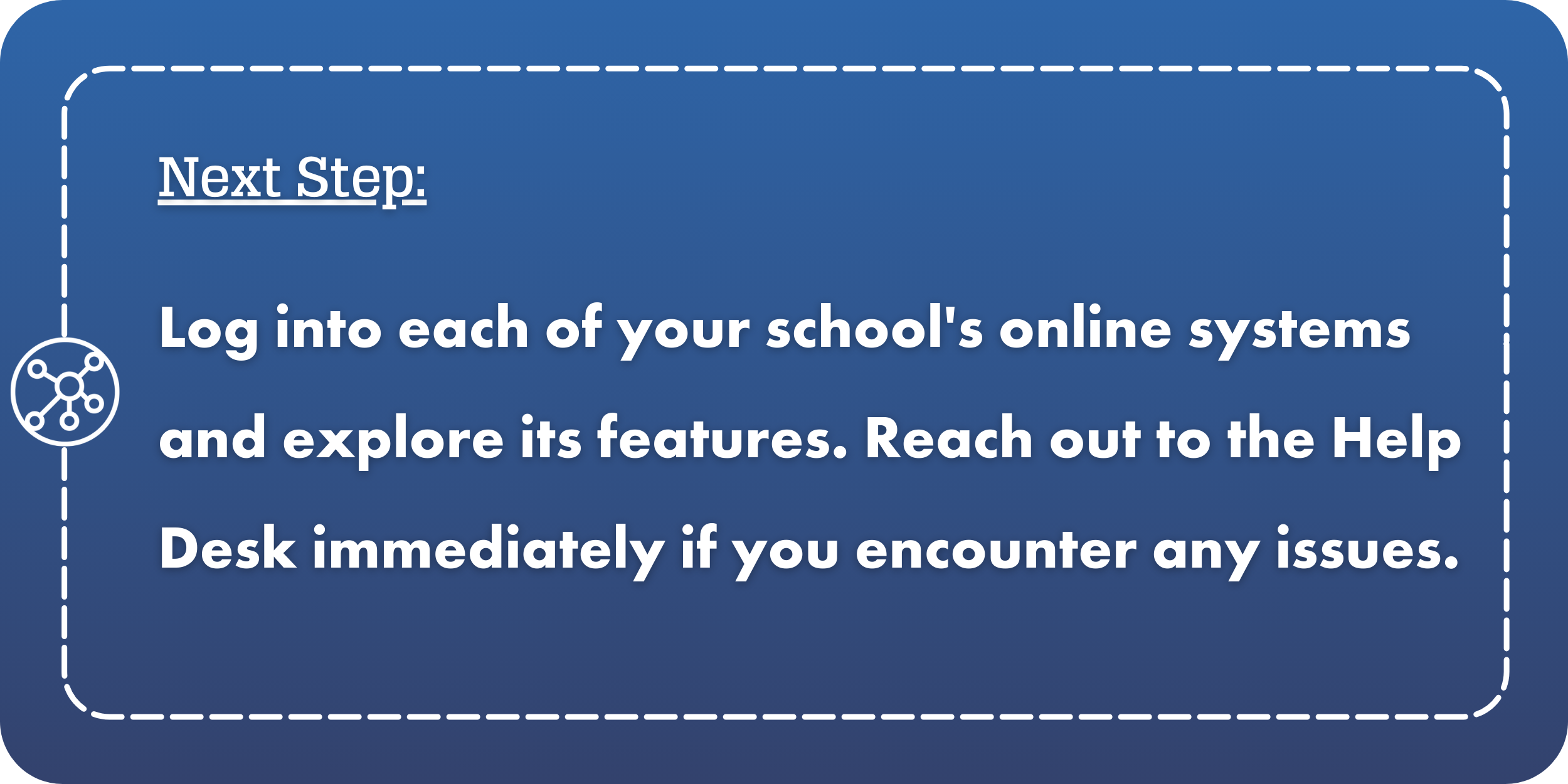
Log into your Learning Management System (LMS): Familiarize yourself with the LMS, where you'll find course materials, submit assignments, and participate in discussions. Explore its features, and if you're unsure about anything, seek out tutorials or ask for help.
Navigate the Student Portal: The student portal is often the place where you can access your academic records, register for classes, and manage your financial aid. Ensure you can navigate it easily.
Seek Technical Support if Needed: If you encounter any issues accessing these systems, don't hesitate to contact your school’s technical support or Help Desk. It's better to resolve these problems early than to miss important updates.
2. Create a Study Plan
A well-structured study plan is critical to managing your coursework and maintaining a balanced schedule:
Designate Study Times and Spaces: Look at your weekly schedule and identify specific blocks of time you can dedicate to each course. Consistency is key—try to study at the same times each week, in the same spaces to establish a routine.

3. Connect with Advisors and Instructors
Building relationships with your academic advisors and instructors early on can help clarify your path and prevent future issues:
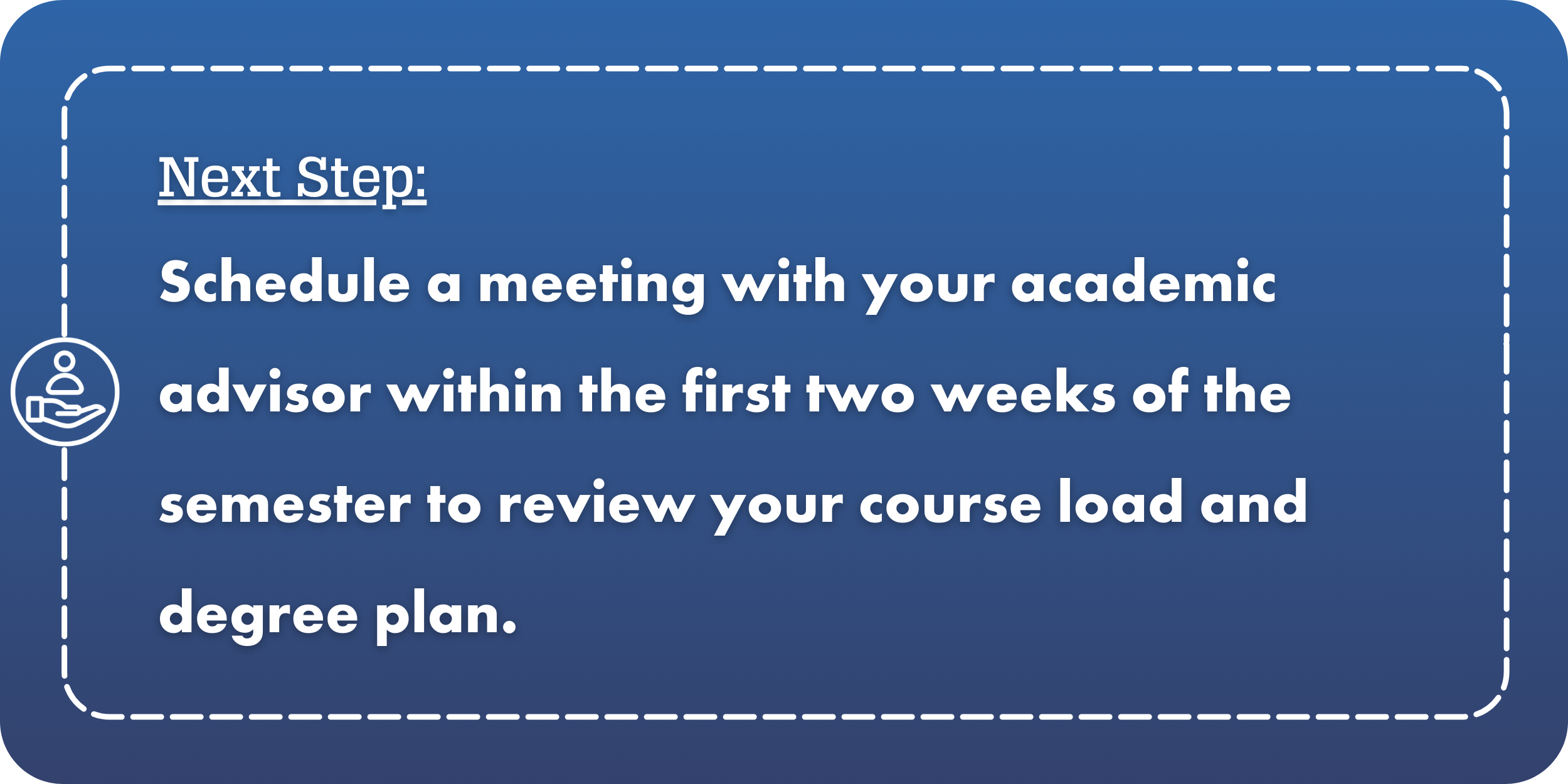
Clarify Your Course Load: Double-check that you’re enrolled in the correct courses for your degree plan. If you’re uncertain, reach out to your advisor before the add/drop deadline.
Ask Questions Early: Don’t wait until you feel like you are struggling to ask questions. Instructors and advisors are there to help, so reach out as soon as you need guidance.
Confirm Your Degree Path: Ensure you understand the requirements for your degree and how your current courses fit into that plan.
4. Use Available Resources
Maximize your learning experience by utilizing the resources your school offers:
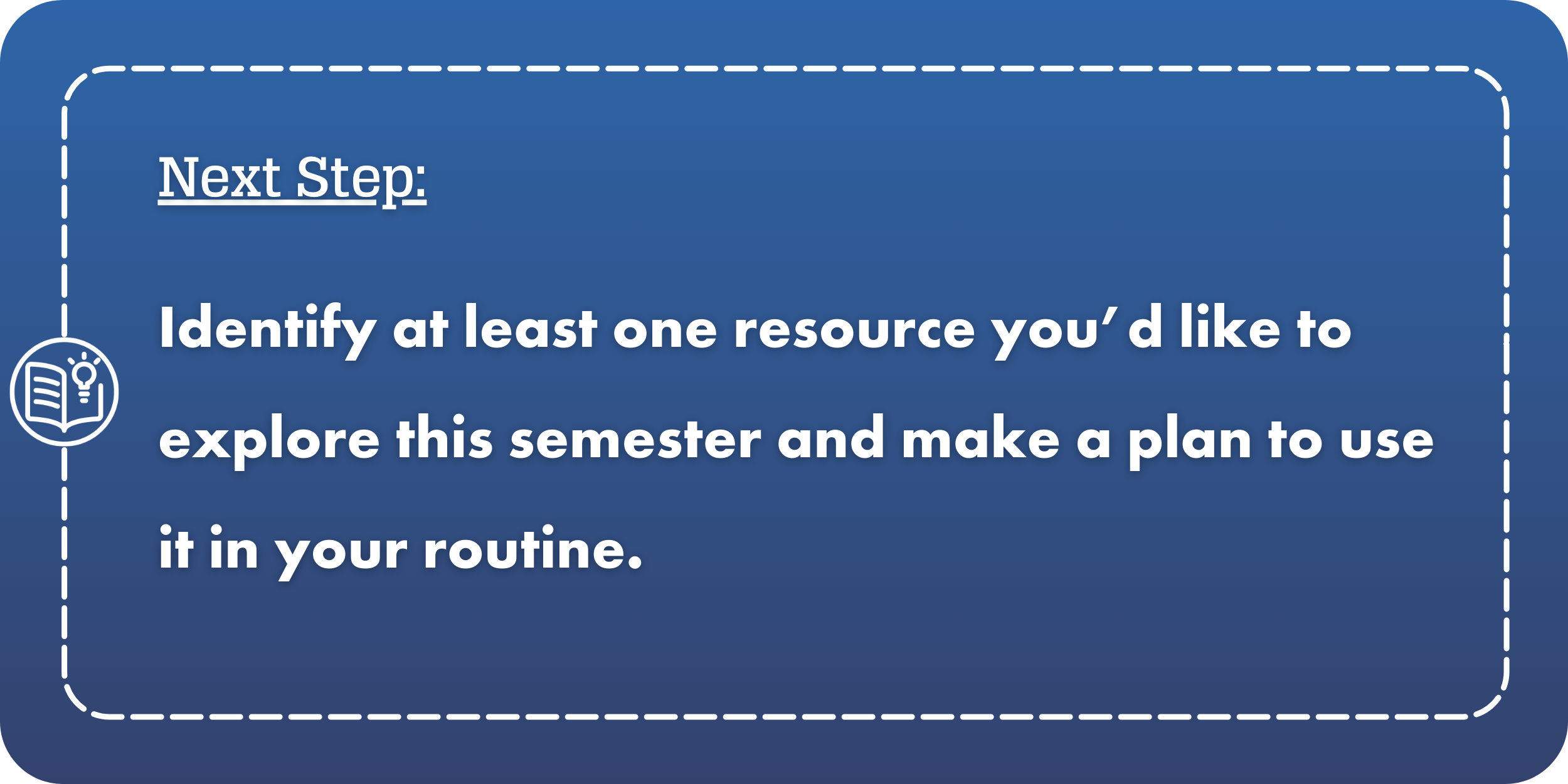
Tutoring Services: Many schools offer free tutoring services for a variety of subjects. If you’re finding a particular course challenging, seek out help early.
Join Study Groups: Collaborating with peers can enhance your understanding of the material and provide moral support.
Explore the Library: Your school’s library is more than just books. It likely offers online resources, research tools, and study spaces.
5. Stay Organized
Organization is key to staying ahead and managing your responsibilities effectively:
Use a Planner: Whether you prefer a physical planner or a digital one, use it to track assignments, deadlines, and important dates.
Set Reminders: Don’t rely solely on memory. Set reminders for key deadlines and appointments to ensure nothing slips through the cracks.
Break Down Tasks: Large assignments can be overwhelming. Break them down into smaller, manageable tasks, and tackle them one at a time.

6. Prioritize Self-Care
Balancing academics, work, and personal life can be challenging. Prioritizing self-care is essential to avoid burnout:
Set Boundaries: Establish clear boundaries between study time and personal time. This will help you maintain a healthy balance.
Take Breaks: Regular breaks during study sessions can boost productivity and prevent fatigue.
Engage in Activities You Enjoy: Make time for hobbies, exercise, and socializing to recharge your batteries.

7. Connect with Your Dedicated ReUp Coach
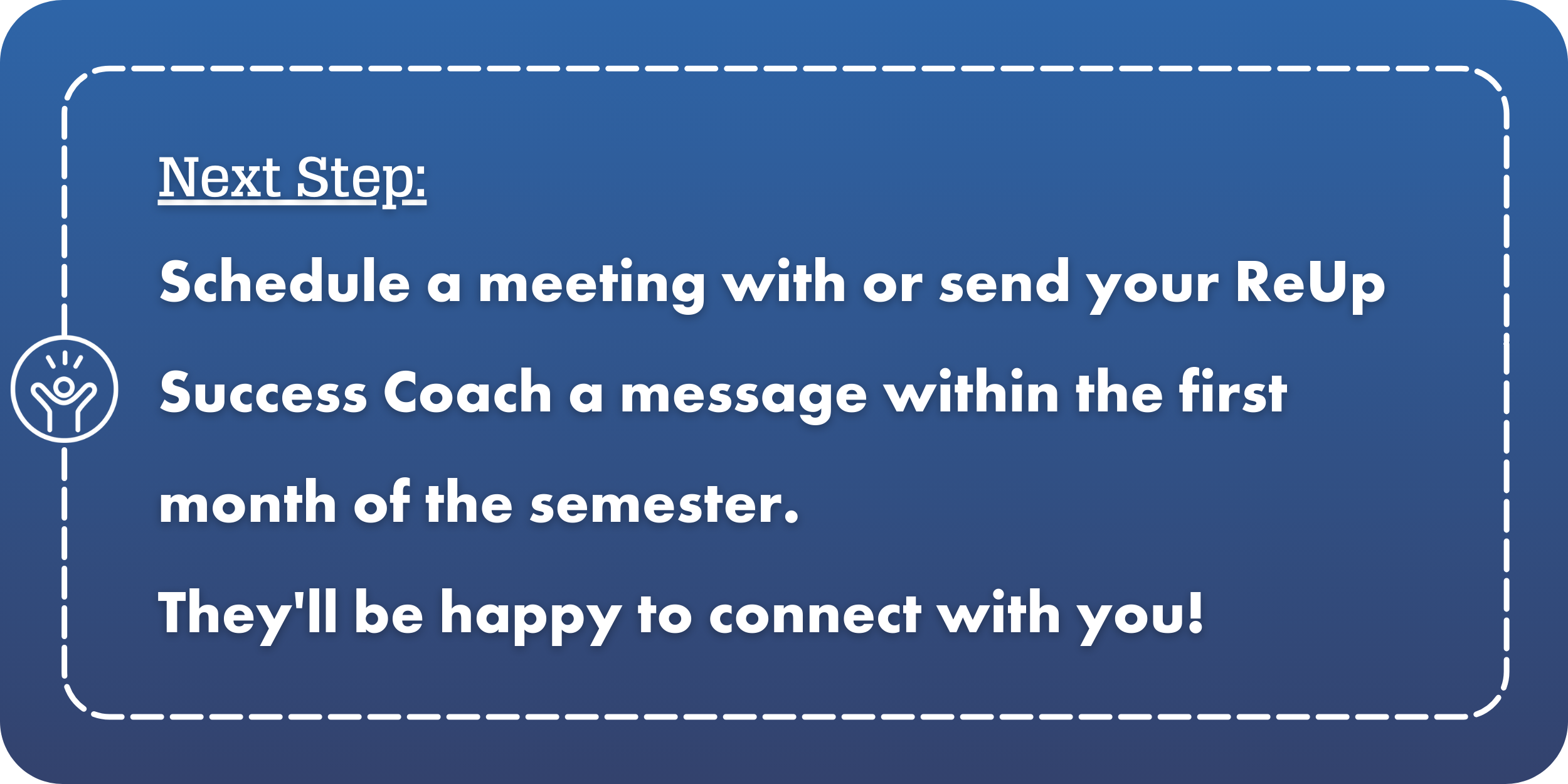
Your ReUp Success Coach is a valuable resource throughout your academic journey:
Discuss Challenges: If you’re facing any challenges—academic or personal—your coach can provide support and strategies to overcome them.
Celebrate Wins: Don’t forget to celebrate your successes, no matter how small. Your coach can support you in recognizing your strengths and wins!
Explore Success Coaching: ReUp’s Success Coaching is designed to help you stay on track and achieve your goals. Coaching can happen on your own time.
Starting a new semester can feel overwhelming, but by taking these actionable steps, you can set yourself up for success. Remember, you’re not alone—use the resources available to you, and don’t hesitate to reach out for support when needed. Here’s to a strong start and a successful semester!


