Success in your studies is within reach when you approach your tasks with a clear and organized plan. However, it's easy to feel overwhelmed, especially when you have to balance school with work and family responsibilities.
This study plan is designed to help you stay organized and focused by breaking tasks into manageable steps. Use it to set clear goals, identify key concepts, and schedule your study sessions to reduce stress and stay motivated throughout the semester.
Remember, small steps add up to big results!
Click here to skip to the full template
Step 1: Set Your Weekly Goals 🎯
Instructions: Identify the top three things you need to accomplish this week. These can include reviewing notes, completing assignments, or preparing for exams.
Example:
- Goal 1: Review lecture notes from chapters 1-5.
- Goal 2: Complete 20 practice problems on supply and demand.
- Goal 3: Draft an outline for the research paper.
Step 2: Identify Key Concepts 🧠
Instructions: Write down 3–5 key concepts or topics you need to focus on. These might be areas where you need more understanding or critical material for your exams.
Example:
- Key Concept 1: Theories of motivation (for psychology class)
- Key Concept 2: Supply and demand curves (for economics class)
- Key Concept 3: Types of literary themes (for literature class)
Step 3: Choose Study Methods 📖
Instructions: For each key concept, list the study method(s) you will use. Consider methods such as reviewing notes, creating concept maps, watching videos, or practicing questions.
Example:
|
Key Concept |
Study Method(s) |
|
Theories of motivation |
Watch a video, create a mind map |
|
Supply and demand |
Solve practice problems, record summary |
|
Literary themes |
Review notes, discuss in study group |
Step 4: Schedule Study Sessions 🕒
Instructions: Plan your study sessions for the week. Include the days and times that work best for you, ensuring you’re balancing other commitments.
Example:
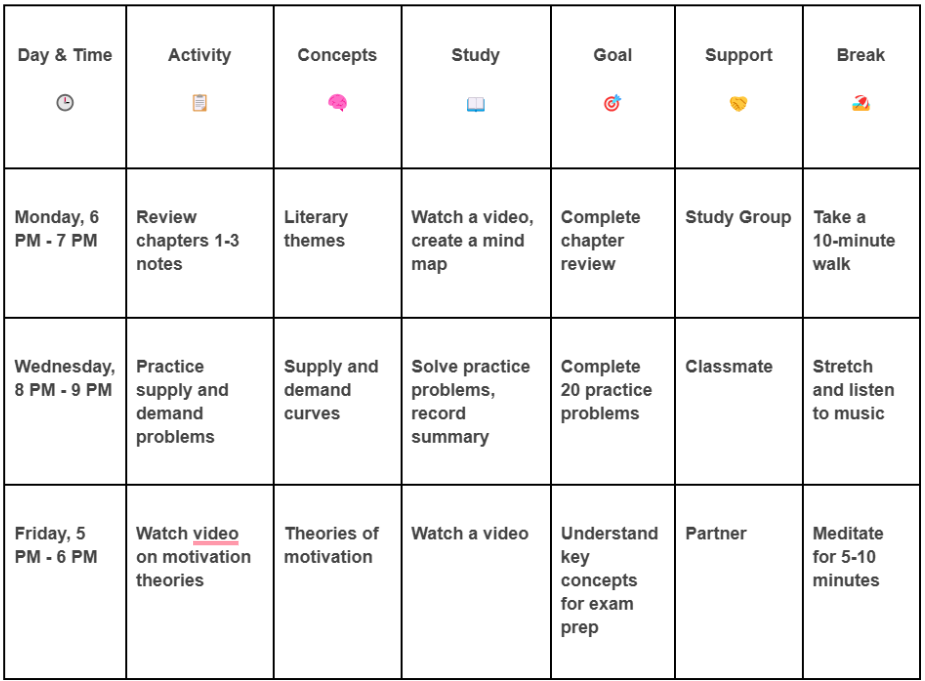
- Monday: 6 PM – 7 PM (Review chapters 1-3 notes)
- Wednesday: 8 PM – 9 PM (Practice supply and demand problems)
- Friday: 5 PM – 6 PM (Watch a video on motivation theories)
Step 5: Set Up Checkpoints ✅
Instructions: Add checkpoints to reflect on your progress. Use these prompts:
Example:
- Mid-Week Checkpoint: “Am I on track with my study goals?”
- Reflection: I have completed 2 of 3 goals so far. I need to allocate more time for my research paper.
- End-of-Week Checkpoint: “What went well? What can I adjust for next week?”
- Reflection: Reviewing notes early helped. Next week, I will try to schedule shorter but more frequent study sessions.
Step 6: Share Your Plan 🤝
Instructions: Identify someone who can help you stay accountable, such as a coach, peer, or family member.
Example:
- Accountability Partner: My study group partner.
Step 7: Identify Ways to Take Breaks 🏖️
Instructions: Taking regular breaks helps maintain focus and prevents burnout. Identify activities that help you recharge without distracting you too much from your studies.
Suggestions:
- Physical Activity: Stretch, go for a short walk, or do light exercise.
- Mental Refresh: Practice deep breathing, meditate, or listen to relaxing music.
- Quick Fun: Watch a short, uplifting video or chat with a friend (but set a timer!).
Example:
- Break Plan: After each study session, I will take a 10-minute walk to clear my mind.
Here's an example of a simple way to put it all together:
Next Step:
To move forward with this study plan, start by implementing Step 1: set your weekly goals. Identify three key tasks to complete by week's end, such as reviewing notes, completing assignments, or preparing for an exam.
Then proceed through the remaining steps—identifying key concepts, selecting study methods, and scheduling sessions. Regular checkpoints and breaks will help maintain progress and prevent burnout.
Reminder 🌟
Consistency matters more than perfection. Keep moving forward. You’ve got this!


